Moonstruck!
It's not about the movie.
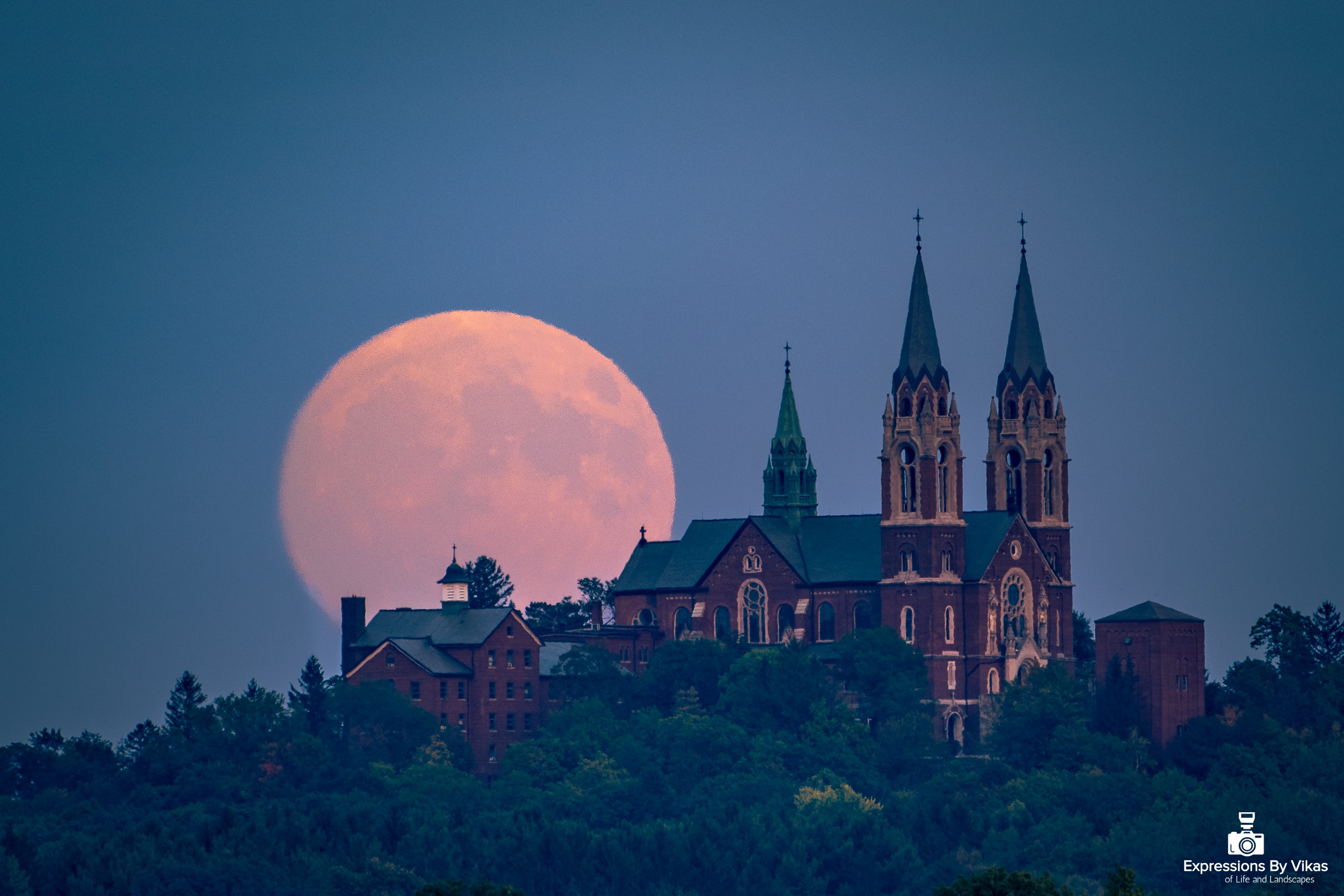
It’s a Full Moon tonight! and it’s called the Blood Moon … ‘coz it is going to be eclipsed by the Earth. But Earth is not big enough to cast a shadow that would make it completely go dark … so the diffused light from around the edges of the Earth lights up the moon in a warm reddish light … and hence the name Blood Moon.
Do you ever just stop and look at the moon … I mean really look at it? I do. Not as often as I would like to … and especially when its’ a full moon. I feel that I have a special connection with it. Growing up, I used to say that I am a Selenian (Greek for moon is Selene). Maybe it was because I didn’t fit in … in the normal circles … perhaps I still don’t … and hence the feeling of being connected to somewhere far far away… distant but a place that is relatable from the stories of one’s childhood. While gazing at it I sometimes miss being there.
Anyhow, isn't it funny how many names we have for it? We call it "Moon" in English, simple and direct. But think about it – in other languages, it’s completely different. The Romans called it Luna, a name that feels almost poetic, whispering of light in the darkness. In Sanskrit, it's Chandra, often associated with coolness and tranquility. Go further afield and you’ll find even more – each culture, each language, painting the moon with its own word, its own sound. Imagine someone in ancient China or Africa looking up and calling it something entirely different again. These names, they’re all human creations, born from our own languages, woven into our myths and stories, colored by our unique ways of seeing the world.
And then there are other names we have given to it like the Blood Moon, Strawberry Moon, Harvest Moon, Waxing Moon, Waning Moon, New Moon, Full Moon and so many more!
But here’s the thing, no matter what we call it, it’s still… the moon. It’s not like changing its name changes it. It’s still that same celestial body, that sphere of rock and craters, faithfully orbiting our Earth. Science tells us about its composition, its phases, its gravitational pull. These are facts, objective realities that exist whether we call it Moon, Luna, Chandra, or anything else under the sun (or, well, moon). Think of it like a tree. In French, it’s “arbre,” in Spanish, “árbol,” in Japanese, “木” (ki). Different names, different sounds, but it’s still the same tree, rooted in the earth, giving shade, breathing life into the air. The name is just our way of labeling it, of making sense of it within our own human framework.
And – it’s not just about the moon, is it? It's about everything. We all look at the world through our own lenses, colored by our own experiences, beliefs, and backgrounds. Just like we give the moon different names, we interpret events, people, and ideas in countless different ways. What one person sees as romantic, another might see as melancholic. What one culture celebrates, another might view with caution. Our perception, our perspective, becomes our reality. Someone might see the moon as a symbol of feminine energy, another as a cold, distant rock, and yet another might just see it as a beautiful light in the night sky. None of these perspectives are inherently wrong, they're just… different facets of the same unchanging moon.
And in a world that often feels so… well, let's be honest, loud and polarized, this moon-thought feels strangely comforting. We’re bombarded with so many strong opinions, so many “right” and “wrong” viewpoints shouted from every corner of the internet and beyond. It's easy to get swept up in the noise, to feel pressured to pick a side, to believe that your way of seeing things is the only way. But the moon reminds us that there are always multiple perspectives. Understanding that people call the same thing by different names, see the same object in different lights, can actually be incredibly freeing. It allows us to step back a bit, to be a little less rigid in our own views, and maybe, just maybe, to be a little more understanding of others. It’s about finding balance in a world that often feels like it’s teetering on the edge of extremes. Recognizing that different viewpoints exist doesn't mean abandoning your own, but it does mean opening yourself up to the possibility that there's more to the story than just your own perspective. And just like the moon remains constant despite the changing names, perhaps there are underlying truths and common ground that exist even amidst our wildly different interpretations of the world.
So, tonight, maybe take a moment to look up at the moon again. Think about all the names it has, all the stories told about it, all the different ways people have seen it throughout history. And maybe, just maybe, let that unchanging moon remind you to be a little more open to the ever-changing perspectives of the world around you. It’s a big, beautiful, and often confusing world, but sometimes, looking at something constant, something simple, like the moon, can help us find a little bit of peace and a broader understanding.
Perfect timing, great read!